Parametric Optimization for Minimizing Surface Roughness in Electrochemical Machining (ECM) by Full Factorial Design
DOI:
https://doi.org/10.71229/sj2cff95Keywords:
Anova , Electrolyte , Minitab , Nontraditional machining , Statistical modelingAbstract
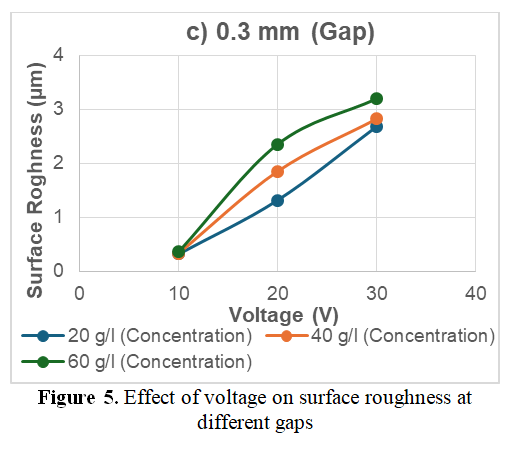
Achieving a high-quality machined surface is the real challenge in machining processes, but not with electrochemical machining (ECM). This research studied surface roughness as an indicator of machining accuracy and functional performance of a workpiece of high-speed steel AISI M2 using a tool of copper in an electrolyte of sodium chloride (NaCl), combined with water. It aimed to get a very smooth surface that can be used in precision industries such as medicine, aviation, turbine blades, and injection molds, thus reducing friction between parts, improving the coating and lubricating properties, and increasing thermal and electrical conductivity. Studying surface roughness can resolve several industrial problems related to unevenness or microscopic irregularity, as well as mechanical deformations on the workpiece surface, and loss of accuracy of dimensions. This was accomplished practically through experiments, varying the values of operating conditions, including a voltage of (10, 20, and 30 V), an electrolyte concentration of (20, 40, and 60 g/l), and a gap of (0.1, 0.2, and 0.3 mm). In addition, statistic was used to describe the relationship between operating conditions and surface roughness by creating a mathematical model in Minitab software. The design of experiments was created by a full factorial design that analysed the main effects of the operating conditions. The results showed that a smoother surface with less roughness was obtained with a value of 0.3201µm, making ECM a very good finishing process. Voltage had a high effect with 93.8% contribution, followed by electrolyte concentration with 3.9% contribution, while gap did not have a significant effect. The operating conditions that gave lower surface roughness were A voltage of 10V, an electrolyte concentration of 20g/l, and a gap of 0.3mm.
References
[1] Hassan El-Hofy, Advanced Machining Process, Nontraditional and Hybrid machining. New York: McGraw-Hill, 2005.
[2] Umasankar Mallick, “Estimation of MRR by using U-shape Electrode in Electrochemical Machining,” M. Sc thesis, National Institute Technology, India, 2009.
[3] M. K. Das, K. Kumar, T. K. Barman, and P. Sahoo, “Optimization of surface roughness and MRR in electrochemical machining of EN31 tool steel using grey-Taguchi approach,” Procedia materials science, vol. 6, pp. 729–740, 2014.
[4] D. Zhu, D. Zhu, Z. Xu, Q. Xu, and J. Liu, “Investigation on the flow field of W-shape electrolyte flow mode in electrochemical machining,” J. Appl. Electrochem., vol. 40, no. 3, pp. 525–532, 2010. DOI: https://doi.org/10.1007/s10800-009-0024-y
[5] X. Ding, W. Y. H. Liew, and X. D. Liu, “Evaluation of machining performance of MMC with PCBN and PCD tools,” Wear, vol. 259, no. 7–12, pp. 1225–1234, 2005. DOI: https://doi.org/10.1016/j.wear.2005.02.094
[6] Y. Sahin, M. Kok, and H. Celik, “Tool wear and surface roughness of Al2O3 particle-reinforced aluminium alloy composites,” J. Mater. Process. Technol., vol. 128, no. 1–3, pp. 280–291, 2002. DOI: https://doi.org/10.1016/S0924-0136(02)00467-3
[7] S. K. Ghazi, M. A. Abdullah, and H. H. Abdulridha, “Investigating the impact of EDM parameters on surface roughness and electrode wear rate in 7024 aluminum alloy,” Engineering, Technology & Applied Science Research, vol. 15, no. 1, pp. 19401–19407, 2025, [Online]. Available: https://doi.org/10.48084/etasr.9252 DOI: https://doi.org/10.48084/etasr.9252
[8] J. C. da Silva Neto, E. M. Da Silva, and M. B. Da Silva, “Intervening variables in electrochemical machining,” J. Mater. Process. Technol., vol. 179, no. 1–3, pp. 92–96, 2006. DOI: https://doi.org/10.1016/j.jmatprotec.2006.03.105
[9] Ramandeep Singh, Nikhil Gandotra, and Ayyappan Solaiyappan, “Study of Different Work Materials Effect on Surface Roughnes in Electrochemical Machining Process,” Int. J. Res. Eng. Technol., vol. 04, no. 07, pp. 505–513, 2015.
[10] P. K. Mishra, Nonconventional machining. Narosa publishing house New Delhi, 1997.
[11] Michael Field, John F. Kahles, and William P. Koster, ASM Handbook - Machining - Surface Finish and Surface Integrity Chapter, vol. 16. ASM Handbook Committee.
[12] M. A. Abdullah, A. M. S. Ahmed, and A. R. Mohammed, “Prediction of surface roughness in electrochemical process of stainless steel 301 by response surface methodology,” University of Thi-Qar Journal for Engineering Sciences, vol. 14, no. 1, pp. 29–40, 2024. DOI: https://doi.org/10.31663/utjes.14.1.561
[13] N. T. B. Nhung, D. T. Liem, and T. Q. Thanh, “The effects of the process parameters in electrochemical machining on the surface quality,” VNUHCM Journal of Engineering and Technology, vol. 3, no. SI1, pp. SI80–SI91, 2020. DOI: https://doi.org/10.32508/stdjet.v3iSI1.725
[14] J. Li, D. Wang, and D. Zhu, “A new perspective on the surface quality of titanium alloys in pulsed electrochemical machining: Effect of frequency and passivation film,” J. Mater. Process. Technol., vol. 330, p. 118463, 2024. DOI: https://doi.org/10.1016/j.jmatprotec.2024.118463
[15] Y. Wang, Z. Xu, J. Hu, and A. Zhang, “Surface integrity analysis of electrochemical machining of γ-TiAl alloys,” Mater. Today Commun., vol. 25, p. 101686, 2020. DOI: https://doi.org/10.1016/j.mtcomm.2020.101686
[16] G. Wang, Z. Liu, J. Niu, W. Huang, and B. Wang, “Effect of electrochemical polishing on surface quality of nickel-titanium shape memory alloy after milling,” Journal of Materials Research and Technology, vol. 9, no. 1, pp. 253–262, 2020. DOI: https://doi.org/10.1016/j.jmrt.2019.10.053
[17] A. F. Ibrahim, “Prediction of Surface Roughness and Material Removal Rate in Electrochemical Machining Using Taguchi Method,” Al-Khwarizmi Engineering Journal, vol. 12, no. 4, pp. 72–80, 2016. DOI: https://doi.org/10.22153/kej.2016.06.001
[18] M. K. Das, K. Kumar, T. K. Barman, and P. Sahoo, “Optimization of surface roughness and MRR in electrochemical machining of EN31 tool steel using grey-Taguchi approach,” Procedia materials science, vol. 6, pp. 729–740, 2014. DOI: https://doi.org/10.1016/j.mspro.2014.07.089
[19] S. R. Rao and G. Padmanabhan, “Parametric optimization in electrochemical machining using utility based Taguchi method,” Journal of Engineering Science and Technology, vol. 10, no. 1, pp. 81–96, 2015.
[20] R. Singh, N.Gandotra, and A. Solaiyappan, “Study of different work materials effect on surface roughness in electrochemical machining process,” Int. J. Res. Eng. Technol., 2015. DOI: https://doi.org/10.15623/ijret.2015.0407081
[21] M. A. Abdullah, S. H. Aghdeab, and S. K. Ghazi, “Optimization of Surface Roughness For Al-alloy in Electro-chemical Machining (ECM) Using Taguchi Method,” Journal of Engineering, vol. 23, no. 10, pp. 62–71, 2017. DOI: https://doi.org/10.31026/j.eng.2017.10.05
[22] N. G. Ghazi, S. H. Aghdeab, and A. O. Basheer, “The Effect of Voltage on Material Removal Rate in the ECM Process,” Engineering, Technology & Applied Science Research, vol. 15, no. 3, pp. 23680–23685, 2025. DOI: https://doi.org/10.48084/etasr.11009
[23] Z. S. Ali, R. R. Elias, and Q. S. Mahdi, “Investigating affecting EDM process parameters on material removal rate, electrode wear rate and surface roughness of tool steel,” in AIP Conference Proceedings, AIP Publishing LLC, 2022, p. 060027. DOI: https://doi.org/10.1063/5.0092921
[24] M. Al-Wswasi, W. A. Al-Khaleeli, and S. A. Aufy, “Implement the artificial neural network concept for predicting the mechanical properties of printed polylactic acid parts,” Advances in Science and Technology. Research Journal, vol. 19, no. 5, pp. 73–83, 2025. DOI: https://doi.org/10.12913/22998624/201463
Downloads
Published
Issue
Section
License
Copyright (c) 2026 Al-Noor Journal of Engineering Management and Computer Science

This work is licensed under a Creative Commons Attribution-NonCommercial-ShareAlike 4.0 International License.
How to Cite