Scalable Blockchain-Based Electronic Evidence Sharing Using HotStuffle Consensus and Zero-Knowledge Proofs
DOI:
https://doi.org/10.71229/7854y715Keywords:
Blockchain, Electronic Evidence, HotStuff Consensus, Zero-Knowledge Proofs, Digital ForensicsAbstract
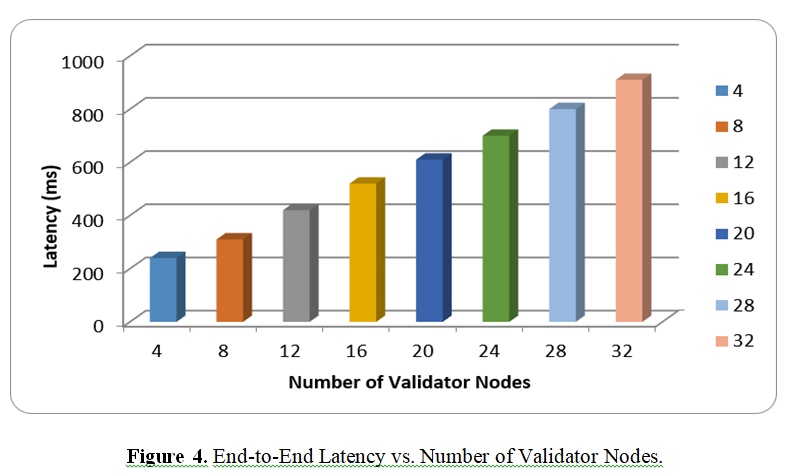
Preservation and secure treatment of digital evidence across different courts of justice are serious issues due to trust, information leakage, scalability and dynamism. Existing centralised and blockchain-based evidence databases are vulnerable to single points of failure, are privacy-unfriendly, or have significant performance gaps at scale. To overcome these defects, this paper proposes a blockchain-based privacy-preserving and scalable electronic evidence management system for the judicial alliance environments. The proposed system will be constructed based on a consortium blockchain architecture, with HotStuffle Byzantine Fault Tolerant (BFT) consensus protocol, Zero-Knowledge Proof (ZKP) based access authorization, and a more operational Ciphertext-Policy Attribute-Based Encryption (CP-ABE) architecture. It is an on-chain/off-chain storage structure where cryptographic hash values, metadata, and access logs are stored on-chain to provide integrity, auditability, and non-repudiation. Conversely, encrypted electronic evidence files are not kept on blockchains to reduce storage overheads. ZKP supports privacy-sensitive authentication without disclosing valuable identity or role information, and the improved CP-ABE protocol supports finely grained, revocable access control by storing access policies in ciphertext. This has been supported by extensive testing through large-scale experimentation to demonstrate the effectiveness and practicability of the proposed framework. Scalability: The results show that end-to-end access latency increases by 240-910 ms as the number of validator nodes increases, confirming HotStuffle's consensus' scalability advantage. The system's throughput is almost linearly related to the rate of transaction arrivals, reaching a peak of 390 transactions/second, after which it starts levelling off. The overhead of ZKP during verification is low, and verification time increases by 36 ms and 8 ms for proofs of 10 KB and 80 KB, respectively. In addition, the time required to decrypt CP-ABE increases gradually with the number of access attributes, ranging from 5 to 285 ms. Conversely, even when 40 per cent of users are revoked, the revocation processing time remains reasonable. Security and comparative analysis demonstrate that the described framework can provide better privacy protection and fine-grained access control, resist collusion and replay attacks, and is more advantageous than existing blockchain-based models of electronic evidence sharing. Overall, the proposed system offers adequate scalability, privacy, and security; thus, it can be used for large-scale deployment of judicial alliances.
References
[1] M. M. Jalalzai, J. Niu, C. Feng, and F. Gai, “Fast-HotStuffle: A fast and robust BFT protocol for blockchains,” IEEE Transactions on Dependable and Secure Computing, vol. 21, no. 4, pp. 2478–2493, Jul. 2023, doi: 10.1109/TDSC.2023.3308848. DOI: https://doi.org/10.1109/TDSC.2023.3308848
[2] S. Alqahtani and M. Demirbas, “Bottlenecks in blockchain consensus protocols: PBFT, Tendermint, HotStuffle, and Streamlet,” In 2021 IEEE International Conference on Omni-Layer Intelligent Systems (COINS) (pp. 1-8). IEEE
[3] Partala, J., Nguyen, T. H., & Pirttikangas, S. “Non-interactive zero-knowledge for blockchain: A survey,” IEEE Access, vol. 8, pp. 227184–227196, 2020. DOI: https://doi.org/10.1109/ACCESS.2020.3046025
[4] A. Konkin and S. Zapechnikov, “Privacy methods and zero-knowledge proof for corporate blockchain,” Procedia Computer Science, vol. 190, pp. 471–478, 2021. DOI: https://doi.org/10.1016/j.procs.2021.06.055
[5] B. Fatima and S. Senthilkumar, “Leveraging zero-knowledge proofs for privacy-preserving blockchain transactions,” in Proc. ICICC, pp. 1–6, 2025. DOI: https://doi.org/10.2139/ssrn.5239705
[6] HAQUE, Ehtisham Ul, et al. “A scalable blockchain based framework for efficient IoT data management using lightweight consensus,” Scientific Reports, 2024, 14.1: 7841. DOI: https://doi.org/10.1038/s41598-024-58578-7
[7] WANG, Huihui, et al. “TEBChain: A trusted and efficient blockchain-based data sharing scheme in UAV-assisted IoV for disaster rescue,”IEEE Transactions on Network and Service Management, 2024, 21.4: 4119-4130. DOI: https://doi.org/10.1109/TNSM.2024.3394162
[8] WANG, Rong, et al. “Improved fast-response consensus algorithm based on HotStuff,” Sensors, 2024, 24.16: 5417. DOI: https://doi.org/10.3390/s24165417
[9] ALGHAMDI, Turki Ali; KHALID, Rabiya; JAVAID, Nadeem. “A survey of blockchain based systems: Scalability issues and solutions, applications and future challenges,” IEEE Access, 2024, 12: 79626-79651. DOI: https://doi.org/10.1109/ACCESS.2024.3408868
[10] S. Alqahtani and M. Demirbas, “Bottlenecks in blockchain consensus protocols,” In 2021 IEEE International Conference on Omni-Layer Intelligent Systems (COINS) (pp. 1-8). IEEE DOI: https://doi.org/10.1109/COINS51742.2021.9524210
[11] D. Kang, S. Gupta, D. Malkhi, and M. Sadoghi, “HotStuffle-1: Linear consensus with one-phase speculation,” Proceedings of the ACM on Management of Data 3.3 (2025): 1-29 DOI: https://doi.org/10.1145/3725308
[12] ZHONG, Weiyu, et al.,” Byzantine fault-tolerant consensus algorithms: A survey,” Electronics, 2023, 12.18: 3801. DOI: https://doi.org/10.3390/electronics12183801
[13] X. Zhang and C. Ye, “A novel privacy protection of permissioned blockchains with conditionally anonymous ring signature,” Cluster Computing, vol. 25, no. 4, pp. 2917–2930, 2022. DOI: https://doi.org/10.1007/s10586-021-03529-4
[14] A. D. Dwivedi, G. Srivastava, S. Dhar, and R. Singh, “A privacy-preserving authentication system based on non-interactive zero-knowledge proof,” Journal of Information Security and Applications, vol. 58, Art. no. 102718, 2022.
[15] G. E. Myeong and S. Kim, “Blockchain-based zero-knowledge proof protocol for privacy-preserving healthcare data sharing,” Journal of Technological Informatics and Engineering, 2025. DOI: https://doi.org/10.51903/jtie.v4i1.296
[16] M. El-Hajj and B. Oude Roelink, “Evaluating the efficiency of zk-SNARK, zk-STARK, and Bulletproofs,” Information, vol. 15, no. 8, Art. no. 463, 2024. DOI: https://doi.org/10.3390/info15080463
[17] THALER, Justin, “Proofs, arguments, and zero-knowledge,” Foundations and Trends® in Privacy and Security, 2022, 4.2-4: 117-660. DOI: https://doi.org/10.1561/3300000030
[18] Z. Ren, Y. Wang, H. Li, and X. Chen, “Blockchain-based CP-ABE data sharing and privacy-preserving scheme using distributed key management system and zero-knowledge proof,” Journal of King Saud University – Computer and Information Sciences, 2024. DOI: https://doi.org/10.1016/j.jksuci.2024.101969
Downloads
Published
Issue
Section
License
Copyright (c) 2026 Al-Noor Journal of Engineering Management and Computer Science

This work is licensed under a Creative Commons Attribution-NonCommercial-ShareAlike 4.0 International License.
How to Cite