Green Synthesis of Silver Nanoparticles and Their Efficiency in the Treatment of Wastewater from Al-Batoul Hospital
DOI:
https://doi.org/10.71229/dz7j7094Keywords:
AgNPs, orange peel extra, Biological applicationAbstract
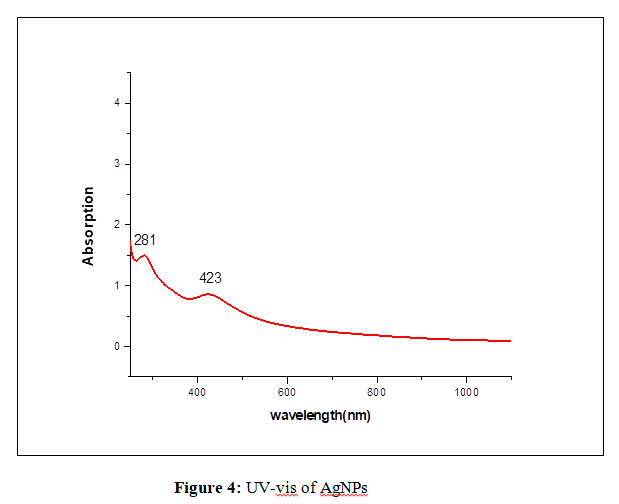
The green synthesis of nanomaterials is of particular interest. It was described as a simple, robust, low cost and ecologically beneficial way. In this work, silver nanoparticles (Ag NPs) was biosynthesized using orange peel extract to treat polluted water at the Diyala River near Al-Batool Hospital. The synthesized AgNPs were characterized using many techniques: X-ray diffraction (XRD) to determine nanomaterial structure; a FESEM (the scanning electron microscope with field emission technique) to analysis nanomaterial shape and its microstructure; Fourier transform infrared spectroscopy (FTIR) to identify nanomaterial nature; and ultraviolet-visible (UV-vis) spectroscopy to investigate the optical properties of nanomaterials. X-ray diffraction measurement shows that the Ag NPs are polycrystalline with dominant directions (111), (200), (122(and silver oxides (111), (202), (132), (200), (202), (022) and (113). The crystal size was calculated from the Scherrer equation with the FCC Structure of produced silver nanoparticles. Additionally, unstable crystalline images emerged. that represented the organic substances inside orange peel extract. FESEM measurement indicated development of the spherical structure shape of Comprising silver nanoparticles with an average particle size of Ag NPs at 126 nm. FTIR analysis revealed Functional groups within the synthesized nanoparticles, identifying a set of bonds, particularly with the silver oxide bond, the metal oxide bond, and another bond observed at the specified wavenumber (623.01cm-1- 432.05cm-1). Chemical attributes (including the potential) of Hydrogen meter (PH), Total Dissolved Salts (TDS), Total Hardness (TH), and Total Suspended Solids (TSS)), physical properties (including turbidity (Turb), and electrical conductivity (E.C)), and biological properties represented by The total bacterial community (T.P.C.) of the aerobic The water that was collected was analyzed both before and after it was treated with AgNPs. All rates of chemical, physical, and biological attributes decreased after treatment with Ag NPs. The silver nanoparticles exhibited remarkable antibacterial efficacy against gram-negative microorganisms. as (Escherichia coli), usually found in polluted water.
References
[1] Bayda, S., Adeel, M., Tuccinardi, T., Cordani, M., & Rizzolio, F. (2019). The history of nanoscience and nanotechnology: From chemical–physical applications to nanomedicine. Molecules, 24(21), 3853. DOI: https://doi.org/10.3390/molecules25010112
[2] Doolotkeldieva, T., Bobusheva, S., Zhasnakunov, Z., & Satybaldiev, A. (2022). Biological activity of Ag and Cu monometallic nanoparticles and Ag-Cu bimetallic nanocomposites against plant pathogens and seeds. Journal of Nanomaterials, 2022, 1–15. DOI: https://doi.org/10.1155/2022/1190280
[3] Khan, I., Saeed, K., & Khan, I. (2019). Nanoparticles: Properties, applications and toxicities. Arabian Journal of Chemistry, 12(7), 908–931. DOI: https://doi.org/10.1016/j.arabjc.2017.05.011
[4]Khlebtsov, N. G. (2007). Gold nanostructures with plasmon resonance for biomedical research. Russian Nanotechnologies, 2(3–4), 69–86.
[5] El-Batal, A. I., El-Sayyad, G. S., Mosallam, F. M., & Fathy, R. M. (2020). Penicillium chrysogenum mediated mycogenic synthesis of copper oxide nanoparticles using gamma rays for in vitro antimicrobial activity against some plant pathogens. Journal of Cluster Science, 31(1), 79–90. DOI: https://doi.org/10.1007/s10876-019-01619-3
[6] Mohammed, S. S., Awadelgied, A. M., saad El Wakeel, S., & Mohamed, A. A. (2019). The ability of Raman spectroscopy to detect surface water pollution in northern Sudan. International Journal of Trend in Scientific Research and Development, 3(3), 1805–1811. DOI: https://doi.org/10.31142/ijtsrd22906
[7] Bartram, J., & Ballance, R. (Eds.). (1996). Water quality monitoring: A practical guide to the design and implementation of freshwater quality studies and monitoring programmes. CRC Press.
[8] United Nations Environment Programme. (2011). UNEP year book 2011: Emerging issues in our global environment. UNEP/Earthprint.
[9] Gowen, A. A., Tsenkova, R., Bruen, M., & O’Donnell, C. (2012). Vibrational spectroscopy for analysis of water for human use and in aquatic ecosystems. Critical Reviews in Environmental Science and Technology, 42(23), 2546–2573. DOI: https://doi.org/10.1080/10643389.2011.592758
[10] Jumaa, M. W., & Abdulqader, R. S. (2024). Evaluation of drinking water quality index in Kirkuk City, Iraq. Central Asian Journal of Medical and Natural Science, 5(3), 815–823.
[11] Mahdi, Z. S., Hashim, I. H., & Jassim, N. M. (2025). Efficiency of silver nanoparticles synthesized by the green synthesis method in treating pollutants in the Dejla River water. AIP Conference Proceedings, 3282(1), Article 050009. DOI: https://doi.org/10.1063/5.0265412
[12] Asif, M., Yasmin, R., Asif, R., Ambreen, A., Mustafa, M., & Umbreen, S. (2022). Green synthesis of silver nanoparticles (AgNPs), structural characterization, and their antibacterial potential. Dose-Response, 20(2), 15593258221088709. DOI: https://doi.org/10.1177/15593258221088709
[13] Mohammadzadeh Kakhki, R., Hedayat, S., & Mohammadzadeh, K. (2019). Novel, green and low cost synthesis of Ag nanoparticles with superior adsorption and solar based photocatalytic activity. Journal of Materials Science: Materials in Electronics, 30(9), 8788–8795. DOI: https://doi.org/10.1007/s10854-019-01203-5
[14] Huq, M. A. (2020). Green synthesis of silver nanoparticles using Pseudoduganella eburnea MAHUQ-39 and their antimicrobial mechanisms investigation against drug resistant human pathogens. International Journal of Molecular Sciences, 21(4), 1510. DOI: https://doi.org/10.3390/ijms21041510
[15] Awwad, A. M., & Salem, N. M. (2012). Green synthesis of silver nanoparticles by mulberry leaves extract. Nanoscience and Nanotechnology, 2(4), 125–128. DOI: https://doi.org/10.5923/j.nn.20120204.06
[16] Mani, M., Pavithra, S., Mohanraj, K., Kumaresan, S., Alotaibi, S. S., Eraqi, M. M., ... & Kaviyarasu, K. (2021). Studies on the spectrometric analysis of metallic silver nanoparticles (Ag NPs) using Basella alba leaf for the antibacterial activities. Environmental Research, 199, Article 111274. DOI: https://doi.org/10.1016/j.envres.2021.111274
[17] Alzubaidi, A. K., Al-Kaabi, W. J., Ali, A. A., Albukhaty, S., Al-Karagoly, H., Sulaiman, G. M., ... & Khane, Y. (2023). Green synthesis and characterization of silver nanoparticles using flaxseed extract and evaluation of their antibacterial and antioxidant activities. Applied Sciences, 13(4), 2182. DOI: https://doi.org/10.3390/app13042182
[18] Lasmi, F., Hamitouche, H., Laribi-Habchi, H., Benguerba, Y., & Chafai, N. (2025). Silver nanoparticles (AgNPs), methods of synthesis, characterization, and their application: A review. Plasmonics, 20(11), 9455–9488. DOI: https://doi.org/10.1007/s11468-025-02894-9
[19] Adrianto, N., Panre, A. M., Istiqomah, N. I., Riswan, M., Apriliani, F., & Suharyadi, E. (2022). Localized surface plasmon resonance properties of green synthesized silver nanoparticles. Nano-Structures & Nano-Objects, 31, Article 100895. DOI: https://doi.org/10.1016/j.nanoso.2022.100895
[20] Bhosale, M. A., & Bhanage, B. M. (2015). Silver nanoparticles: Synthesis, characterization and their application as a sustainable catalyst for organic transformations. Current Organic Chemistry, 19(8), 708–727. DOI: https://doi.org/10.2174/1385272819666150207001154
[21] Brar, S. K., & Verma, M. (2011). Measurement of nanoparticles by light-scattering techniques. TrAC Trends in Analytical Chemistry, 30(1), 4–17. DOI: https://doi.org/10.1016/j.trac.2010.08.008
[22] MacCuspie, R. I. (2011). Colloidal stability of silver nanoparticles in biologically relevant conditions. Journal of Nanoparticle Research, 13(7), 2893–2908. DOI: https://doi.org/10.1007/s11051-010-0178-x
[23] Fernando, I., & Zhou, Y. (2019). Impact of pH on the stability, dissolution and aggregation kinetics of silver nanoparticles. Chemosphere, 216, 297–305. DOI: https://doi.org/10.1016/j.chemosphere.2018.10.122
[24] Prosposito, P., Burratti, L., & Venditti, I. (2020). Silver nanoparticles as colorimetric sensors for water pollutants. Chemosensors, 8(2), 26. DOI: https://doi.org/10.3390/chemosensors8020026
[25] Palani, G., Trilaksana, H., Sujatha, R. M., Kannan, K., Rajendran, S., Korniejenko, K., ... & Uthayakumar, M. (2023). Silver nanoparticles for waste water management. Molecules, 28(8), 3520. DOI: https://doi.org/10.3390/molecules28083520
[26] Awad, F. N. (2020). Study of cadmium ion adsorption from aqueous solutions using biochar prepared from different sources and conditions and treated with silver oxide nanoparticles (Unpublished master's thesis). University of Diyala, Iraq.
[27] Carroll, Z. L., & Oliver, M. A. (2005). Exploring the spatial relations between soil physical properties and apparent electrical conductivity. Geoderma, 128(3–4), 354–374. DOI: https://doi.org/10.1016/j.geoderma.2005.03.008
[28] Khan, M. E., Khan, M. M., & Cho, M. H. (2015). Biogenic synthesis of a Ag–graphene nanocomposite with efficient photocatalytic degradation, electrical conductivity and photoelectrochemical performance. New Journal of Chemistry, 39(10), 8121–8129. DOI: https://doi.org/10.1039/C5NJ01320H
[29] Jain, A. S., Pawar, P. S., Sarkar, A., Junnuthula, V., & Dyawanapelly, S. (2021). Bionanofactories for green synthesis of silver nanoparticles: Toward antimicrobial applications. International Journal of Molecular Sciences, 22(21), 11993. DOI: https://doi.org/10.3390/ijms222111993
[30] Gangaram, S., Naidoo, Y., Dewir, Y. H., & El-Hendawy, S. (2022). Phytochemicals and biological activities of Barleria (Acanthaceae). Plants, 11(1), 82. DOI: https://doi.org/10.3390/plants11010082
[31] Heflish, A. A., Hanfy, A. E., Ansari, M. J., Dessoky, E. S., Attia, A. O., Elshaer, M. M., ... & Behiry, S. I. (2021). Green biosynthesized silver nanoparticles using Acalypha wilkesiana extract control root-knot nematode. Journal of King Saud University - Science, 33(6), 101516. DOI: https://doi.org/10.1016/j.jksus.2021.101516
[32] Mallikarjuna, K., Narasimha, G., Dillip, G. R., Praveen, B., Shreedhar, B., Lakshmi, C. S., ... & Raju, B. D. P. (2011). Green synthesis of silver nanoparticles using Ocimum leaf extract and their characterization. Digest Journal of Nanomaterials and Biostructures, 6(1), 181–186.
[33] Naeimi, H., Nazifi, Z. S., & Amininezhad, S. M. (2015). Preparation of Fe3O4 encapsulated-silica sulfonic acid nanoparticles and study of their in vitro antimicrobial activity. Journal of Photochemistry and Photobiology B: Biology, 149, 180–188. DOI: https://doi.org/10.1016/j.jphotobiol.2015.06.004
[34] Arakha, M., Pal, S., Samantarrai, D., Panigrahi, T. K., Mallick, B. C., Pramanik, K., ... & Jha, S. (2015). Antimicrobial activity of iron oxide nanoparticle upon modulation of nanoparticle-bacteria interface. Scientific Reports, 5(1), Article 14813. DOI: https://doi.org/10.1038/srep14813
[35] Sangeetha, J., & Philip, J. (2013). Synthesis, characterization and antimicrobial property of Fe3O4-Cys-HNQ nanocomplex, with L-cysteine molecule as a linker. RSC Advances, 3(21), 8047–8057. DOI: https://doi.org/10.1039/c3ra00005b
Downloads
Published
Issue
Section
License
Copyright (c) 2026 Al-Noor Journal of Engineering Management and Computer Science

This work is licensed under a Creative Commons Attribution-NonCommercial-ShareAlike 4.0 International License.
How to Cite