Progress in Anaerobic Digestion for Improved Biogas Generation : An Overview of Technologies and Challenges
DOI:
https://doi.org/10.71229/2q0ds428Keywords:
Biogas Production, , Anaerobic Digestion , , Renewable Energy, , Methane, , Sustainable Development ,, Biogas Technology ,, Agricultural Waste, , Waste Management, , Process Inhibition, , Circular BioeconomyAbstract
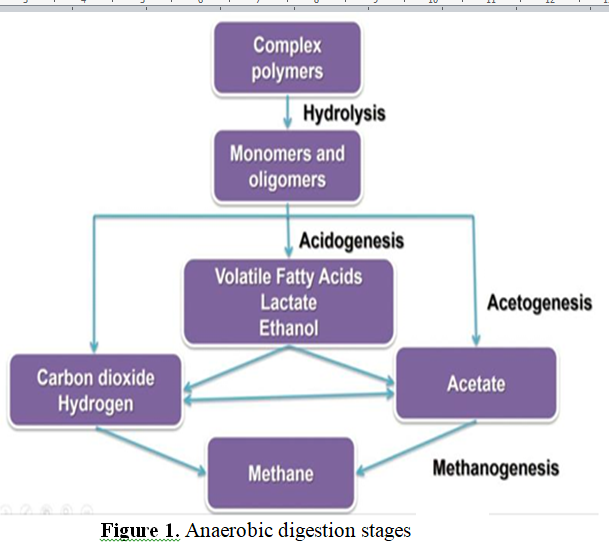
Anaerobic digestion (AD) is emerging as one of the most promising technologies for sustainable waste management and renewable energy production. The demand for clean energy and the increasing production of agricultural, industrial and municipal wastes have raised an interest in biogas production as an environmentally friendly alternative to fossil fuels. This review concerns the recent advances in anaerobic digestion technologies for biogas production and process efficiency. The study reviews the principles of biogas production, the stages of anaerobic digestion and key operating parameters influencing digester performance, such as temperature, pH, organic loading rate, hydraulic retention time and substrate composition. The different types of anaerobic digesters and their applications are discussed as well.
In addition, the review highlights major challenges in anaerobic digestion such as process instability, ammonia, sulfide, volatile fatty acids and other inhibitory compounds. Special emphasis is given to the use of agricultural residues as renewable and sustainable substrates for biogas generation because of their abundant and renewable availability. In addition to limitations and operational constraints, the environmental, economic and energy related benefits of biogas systems are discussed. In conclusion, the development of anaerobic digestion technologies holds great promise for the enhancement of renewable energy production, the reduction of greenhouse gas emissions, and the promotion of sustainable waste management practices. Future research should focus on process optimization, pretreatment technologies, co-digestion strategies, and integration of advanced monitoring systems to maximize biogas yield and process stability.
References
1. Siva Raman, S. and L.C. Stringer, Challenges and solutions for food waste-based biogas production for energy generation in Malaysia: a review. Journal of Wastes and Biomass Management (JWBM), 2024: p. 47–56. DOI: https://doi.org/10.26480/jwbm.01.2024.47.56
2. Jameel, M.K., et al., Biogas: Production, properties, applications, economic and challenges: A review. Results in Chemistry, 2024. 7: p. 101549. DOI: https://doi.org/10.1016/j.rechem.2024.101549
3. Ellacuriaga, M., J. García-Cascallana, and X. Gómez, Biogas production from organic wastes: Integrating concepts of circular economy. Fuels, 2021. 2(2): p. 144–167. DOI: https://doi.org/10.3390/fuels2020009
4. Raja, I.A. and S. Wazir, Biogas production: the fundamental processes. Universal Journal of Engineering Science, 2017. 5(2): p. 29–37. DOI: https://doi.org/10.13189/ujes.2017.050202
5. Price, C.A.H., et al., Catalytic upgrading of a biogas model mixture via low temperature DRM using multicomponent catalysts. Topics in Catalysis, 2020. 63(3): p. 281–293. DOI: https://doi.org/10.1007/s11244-019-01216-8
6. Lisowyj, M. and M.M. Wright, A review of biogas and an assessment of its economic impact and future role as a renewable energy source. Reviews in Chemical Engineering, 2020. 36(3): p. 401–421. DOI: https://doi.org/10.1515/revce-2017-0103
7. Achinas, S., V. Achinas, and G.J.W. Euverink, A technological overview of biogas production from biowaste. Engineering, 2017. 3(3): p. 299–307. DOI: https://doi.org/10.1016/J.ENG.2017.03.002
8. Uddin, M.M. and M.M. Wright, Anaerobic digestion fundamentals, challenges, and technological advances. Physical Sciences Reviews, 2023. 8(9): p. 2819–2837. DOI: https://doi.org/10.1515/psr-2021-0068
9. Kabeyi, M.J.B. and O.A. Olanrewaju, Biogas production and applications in the sustainable energy transition. Journal of Energy, 2022. 2022(1): p. 8750221. DOI: https://doi.org/10.1155/2022/8750221
10. Wagner, A.O., et al., Biological pretreatment strategies for second-generation lignocellulosic resources to enhance biogas production. Energies, 2018. 11(7): p. 1797. DOI: https://doi.org/10.3390/en11071797
11. Hanif, M.U., et al., The effects of using pretreated cotton gin trash on the production of biogas from anaerobic co-digestion with cow manure and sludge. Energies, 2022. 15(2): p. 490. DOI: https://doi.org/10.3390/en15020490
12. Pilarski, K., A.A. Pilarska, and J. Dach, Biogas as renewable energy source: A brief overview. Journal of Ecological Engineering, 2025. 26(7). DOI: https://doi.org/10.12911/22998993/203376
13. Bhardwaj, S. and P. Das, A review: advantages and disadvantages of biogas. International Research Journal of Engineering and Technology, 2017. 4(10): p. 890–893.
14. Pavičić, J., et al., Biogas and biomethane production and usage: technology development, advantages and challenges in Europe. Energies, 2022. 15(8): p. 2940. DOI: https://doi.org/10.3390/en15082940
15. Zhen, G., et al., Overview of pretreatment strategies for enhancing sewage sludge disintegration and subsequent anaerobic digestion: Current advances, full-scale application and future perspectives. Renewable and sustainable energy reviews, 2017. 69: p. 559–577. DOI: https://doi.org/10.1016/j.rser.2016.11.187
16. Piadeh, F., et al., A critical review for the impact of anaerobic digestion on the sustainable development goals. Journal of Environmental Management, 2024. 349: p. 119458. DOI: https://doi.org/10.1016/j.jenvman.2023.119458
17. Park, K.I., M. Park, and James, Fundamentals of probability and stochastic processes with applications to communications. 2018: Springer. DOI: https://doi.org/10.1007/978-3-319-68075-0
18. Wadi, R.M. and S.A. Khalifa, A Review of Biogas Production from Small-Scale Anaerobic Digestion Plants. Journal of Engineering and Sustainable Development, 2024. 28(4): p. 507–521. DOI: https://doi.org/10.31272/jeasd.28.4.10
19. Asfaw, A. and N.E. Benti, Challenges and Solutions in Biogas Technology Adoption in Ethiopia: A Review. Ethiopian Journal of Science and Sustainable Development, 2022. 9(18): p. 10.20372.
20. Kumar, A.K. and S. Sharma, Recent updates on different methods of pretreatment of lignocellulosic feedstocks: a review. Bioresources and bioprocessing, 2017. 4(1): p. 7. DOI: https://doi.org/10.1186/s40643-017-0137-9
21. Laiq Ur Rehman, M., et al., Anaerobic digestion. Water environment research, 2019. 91(10): p. 1253–1271. DOI: https://doi.org/10.1002/wer.1219
22. Hansen, C.L. and D.Y. Cheong, Agricultural waste management in food processing, in Handbook of farm, dairy and food machinery engineering. 2019, Elsevier. p. 673–716. DOI: https://doi.org/10.1016/B978-0-12-814803-7.00026-9
23. Panigrahi, S. and B.K. Dubey, A critical review on operating parameters and strategies to improve the biogas yield from anaerobic digestion of organic fraction of municipal solid waste. Renewable Energy, 2019. 143: p. 779–797. DOI: https://doi.org/10.1016/j.renene.2019.05.040
24. Ngabala, F.J. and J.K. Emmanuel, Potential substrates for biogas production through anaerobic digestion-an alternative energy source. Heliyon, 2024. 10(23). DOI: https://doi.org/10.1016/j.heliyon.2024.e40632
25. Johansen, A., et al., Survival of weed seeds and animal parasites as affected by anaerobic digestion at meso-and thermophilic conditions. Waste management, 2013. 33(4): p. 807–812. DOI: https://doi.org/10.1016/j.wasman.2012.11.001
26. Hagos, K., et al., Anaerobic co-digestion process for biogas production: Progress, challenges and perspectives. Renewable and sustainable energy reviews, 2017. 76: p. 1485–1496. DOI: https://doi.org/10.1016/j.rser.2016.11.184
27. Valença, R.B., et al., Influence of sodium bicarbonate (NaHCO3) on the methane generation potential of organic food waste. Journal of Cleaner Production, 2021. 317: p. 128390. DOI: https://doi.org/10.1016/j.jclepro.2021.128390
28. Kuczman, O., et al., Food waste anaerobic digestion of a popular restaurant in Southern Brazil. Journal of cleaner production, 2018. 196: p. 382–389. DOI: https://doi.org/10.1016/j.jclepro.2018.05.282
29. Dareioti, M.A. and M. Kornaros, Effect of hydraulic retention time (HRT) on the anaerobic co-digestion of agro-industrial wastes in a two-stage CSTR system. Bioresource technology, 2014. 167: p. 407–415. DOI: https://doi.org/10.1016/j.biortech.2014.06.045
30. Nkuna, R., et al., Insights into organic loading rates of anaerobic digestion for biogas production: a review. Critical reviews in biotechnology, 2022. 42(4): p. 487–507.
31. Ezekoye, V., B. Ezekoye, and P. Offor, Effect of retention time on biogas production from poultry droppings and cassava peels. Nigerian Journal of Biotechnology, 2011. 22: p. 53–59.
32. Yan, H., et al., Study on biomethane production and biodegradability of different leafy vegetables in anaerobic digestion. AMB Express, 2017. 7(1): p. 27. DOI: https://doi.org/10.1186/s13568-017-0325-1
33. Gashaw, A., Anaerobic co-digestion of biodegradable municipal solid waste with human excreta for biogas production: a review. American Journal of Applied Chemistry, 2014. 2(4): p. 55–62. DOI: https://doi.org/10.11648/j.ajac.20140204.12
34. Arimi, M.M., et al., Strategies for improvement of biohydrogen production from organic-rich wastewater: a review. Biomass and bioenergy, 2015. 75: p. 101–118. DOI: https://doi.org/10.1016/j.biombioe.2015.02.011
35. Müller, C., et al., CNG und LNG aus biogenen Reststoffen–ein Konzept zur ressourcenschonenden Kraftstoffproduktion. Chemie Ingenieur Technik (CIT), 2020. 92. DOI: https://doi.org/10.1002/cite.202055460
36. Karaca, C. and G. Gurdil, Biogas production potential from animal manure in Samsun province of Turkey. 2019. DOI: https://doi.org/10.2478/sab-2019-0019
37. Chu, L.-B., et al., Simultaneous removal of organic substances and nitrogen using amembrane bioreactor seeded with anaerobic granular sludge under oxygen-limited conditions. Desalination, 2005. 172(3): p. 271–280. DOI: https://doi.org/10.1016/j.desal.2004.07.040
38. Botheju, D., B. Lie, and R. Bakke, Oxygen effects in anaerobic digestion-II. Modeling, Identification and Control, 2010. 31(2): p. 55. DOI: https://doi.org/10.4173/mic.2010.2.2
39. Botheju, D., et al. An experimental study on the effects of oxygen in bio-gasification; Part 1. in proceedings of the International Conference on Renewable Energies and Power Quality (ICREPQ 10), Granada, Spain. 2010. DOI: https://doi.org/10.24084/repqj08.690
40. Lemmer, A., H.-J. Naegele, and J. Sondermann, How efficient are agitators in biogas digesters? Determination of the efficiency of submersible motor mixers and incline agitators by measuring nutrient distribution in full-scale agricultural biogas digesters. Energies, 2013. 6(12): p. 6255–6273. DOI: https://doi.org/10.3390/en6126255
41. Rohstoffe eV, F.N., Leitfaden Biogas: von der Gewinnung zur Nutzung. Order, 2016. 208: p. 156–157.
42. Selvakumar, P. and P. Sivashanmugam, Optimization of lipase production from organic solid waste by anaerobic digestion and its application in biodiesel production. Fuel Processing Technology, 2017. 165: p. 1–8. DOI: https://doi.org/10.1016/j.fuproc.2017.04.020
43. Raboni, M. and G. Urbini, Production and use of biogas in Europe: a survey of current status and perspectives. Revista ambiente & agua, 2014. 9(2): p. 191–202. DOI: https://doi.org/10.4136/ambi-agua.1324
44. Fagbohungbe, M.O., Optimisation of small scale anaerobic digestion technology. 2015: Lancaster University (United Kingdom).
45. Hjort-Gregersen, K., Market overview micro scale digesters. AgroTEch A/S: Aarhus, Denmark, 2015.
46. Vögeli, Y., Anaerobic digestion of biowaste in developing countries: practical information and case studies. 2014: Eawag-Sandec.
47. Garcia, A.P., Techno-economic feasibility study of a small-scale biogas plant for treating market waste in the city of El Alto. KTH School of Industrial Engineering and Management, Division of Energy and Climate, Master of Science Thesis EGI, 2014: p. 28–35.
48. Hamilton, D., Anaerobic digestion of animal manures: Types of Digesters-Oklahoma State University. 2017, Anaerobic Digestion of Animal Manures: Types of Digesters| Oklahoma State ….
49. Krich, K., et al., Biomethane from Dairy Waste, a Sourcebook for the Production and Use of Renewable Natural Gas. 2005.
50. Tauseef, S., T. Abbasi, and S. Abbasi, Energy recovery from wastewaters with high-rate anaerobic digesters. Renewable and Sustainable Energy Reviews, 2013. 19: p. 704–741. DOI: https://doi.org/10.1016/j.rser.2012.11.056
51. Stowe, E.J., Dairy Waste Treatment Utilizing a Two-Phase Anaerobic Digestion System: Evaluation of Parallel Reactor Configuration and Mixing Intensity. 2014: University of Idaho.
52. Rowarth, A.M.J. and F. Scrimgeour, Potential for anaerobic digestion of dairy farm effluent in New Zealand. Journal of New Zealand Grasslands, 2015: p. 71–76. DOI: https://doi.org/10.33584/jnzg.2015.77.486
53. Nleya, Y., et al., Opportunities and challenges for anaerobic digestion of farm dairy effluent. ChemBioEng Reviews, 2023. 10(6): p. 924–940. DOI: https://doi.org/10.1002/cben.202300021
54. Li, Y., et al., Strategies to boost anaerobic digestion performance of cow manure: Laboratory achievements and their full-scale application potential. Science of The Total Environment, 2021. 755: p. 142940. DOI: https://doi.org/10.1016/j.scitotenv.2020.142940
55. Cavali, M., et al., Biochar and hydrochar in the context of anaerobic digestion for a circular approach: An overview. Science of the Total Environment, 2022. 822: p. 153614. DOI: https://doi.org/10.1016/j.scitotenv.2022.153614
56. Rasapoor, M., et al., Recognizing the challenges of anaerobic digestion: Critical steps toward improving biogas generation. Fuel, 2020. 261: p. 116497. DOI: https://doi.org/10.1016/j.fuel.2019.116497
57. Romero-Güiza, M., et al., The role of additives on anaerobic digestion: a review. Renewable and Sustainable Energy Reviews, 2016. 58: p. 1486–1499. DOI: https://doi.org/10.1016/j.rser.2015.12.094
58. McCabe, B., et al. Integration of anaerobic digestion into farming systems in Australia, Canada, Italy, and the UK. in IEA Bioenergy Task. 2020. International Energy Agency.
59. Kougias, P., et al., Foam suppression in overloaded manure-based biogas reactors using antifoaming agents. Bioresource technology, 2014. 153: p. 198–205. DOI: https://doi.org/10.1016/j.biortech.2013.11.083
60. Grimberg, S., et al., Anaerobic digestion of food waste through the operation of a mesophilic two-phase pilot scale digester–assessment of variable loadings on system performance. Bioresource technology, 2015. 178: p. 226–229. DOI: https://doi.org/10.1016/j.biortech.2014.09.001
61. AboDalam, H., et al., Rice wastes for green production and sustainable nanomaterials: an overview. Agri-waste and microbes for production of sustainable nanomaterials, 2022: p. 707–728. DOI: https://doi.org/10.1016/B978-0-12-823575-1.00009-3
62. Bhardwaj, A., et al., Smart water management framework for irrigation in agriculture. Environmental Technology, 2024. 45(12): p. 2320–2334. DOI: https://doi.org/10.1080/09593330.2022.2039783
63. Zhang, Z., et al., Agricultural wastes. Water Environment Research, 2012. 84(10): p. 1386–1406. DOI: https://doi.org/10.2175/106143012X13407275695193
64. Alsharef, A., et al., Review of ML and AutoML solutions to forecast time-series data. Archives of computational methods in engineering, 2022. 29(7): p. 5297–5311. DOI: https://doi.org/10.1007/s11831-022-09765-0
65. Rizal, S., et al., Cotton wastes functionalized biomaterials from micro to nano: a cleaner approach for a sustainable environmental application. Polymers, 2021. 13(7): p. 1006. DOI: https://doi.org/10.3390/polym13071006
66. Jin, Z., et al., Effect of straw returning on soil organic carbon in rice–wheat rotation system: A review. Food and Energy Security, 2020. 9(2): p. e200. DOI: https://doi.org/10.1002/fes3.200
67. Wang, X., et al., Characteristics and non-parametric multivariate data mining analysis and comparison of extensively diversified animal manure. Waste and Biomass Valorization, 2021. 12(5): p. 2343–2355. DOI: https://doi.org/10.1007/s12649-020-01178-z
68. Holm-Nielsen, J.B., T. Al Seadi, and P. Oleskowicz-Popiel, The future of anaerobic digestion and biogas utilization. Bioresource technology, 2009. 100(22): p. 5478–5484. DOI: https://doi.org/10.1016/j.biortech.2008.12.046
69. Khaire, K.C., V.S. Moholkar, and A. Goyal, Bioconversion of sugarcane tops to bioethanol and other value added products: an overview. Materials Science for Energy Technologies, 2021. 4: p. 54–68. DOI: https://doi.org/10.1016/j.mset.2020.12.004
70. Pöschl, M., S. Ward, and P. Owende, Evaluation of energy efficiency of various biogas production and utilization pathways. Applied energy, 2010. 87(11): p. 3305–3321. DOI: https://doi.org/10.1016/j.apenergy.2010.05.011
71. Czekała, W., Biogas as a sustainable and renewable energy source, in Clean fuels for mobility. 2022, Springer. p. 201–214. DOI: https://doi.org/10.1007/978-981-16-8747-1_10
72. Khayal, O., Advantages and limitations of biogas technologies. Preprint. Available online: https://www. researchgate. net/publication/336414255_ADVANTAGES_AND_LIMITATIONS_OF_BIOGAS_TECHNOLOGIES2019 (accessed on 13 August 2023), 2019.
73. Yaqoob, H., et al., The potential of sustainable biogas production from biomass waste for power generation in Pakistan. Journal of cleaner production, 2021. 307: p. 127250. DOI: https://doi.org/10.1016/j.jclepro.2021.127250
Downloads
Published
Issue
Section
License
Copyright (c) 2026 Al-Noor Journal of Engineering Management and Computer Science

This work is licensed under a Creative Commons Attribution-NonCommercial-ShareAlike 4.0 International License.
How to Cite